
Why Your Scalp Health Matters More Than You Think


When most people think about hair health, they focus on what they can see — dryness, breakage, thinning, or shedding. But what many don’t realize is that healthy hair starts beneath the surface.
Your scalp is living skin. And just like the skin on your face or body, it can become congested, inflamed, irritated, or imbalanced — often without obvious warning signs.
At Restore Hair Loss & Scalp Clinic, we see this every day: clients treating the hair while the scalp is silently struggling.
Your Scalp Is Skin — Not Just a Surface for Hair
The scalp contains:
Hair follicles
Sebaceous (oil) glands
Blood vessels
Nerve endings
Microbiome (healthy bacteria)
When the scalp is healthy, follicles receive oxygen, nutrients, and proper blood flow. When it’s not, hair growth becomes compromised.
Even if your hair looks fine now, an unhealthy scalp can quietly disrupt the hair growth cycle over time.
Common Signs of an Unhealthy Scalp
Many people normalize these symptoms without realizing they signal imbalance:
Persistent itching
Flaking or dandruff
Oily scalp within hours of washing
Tightness or tenderness
Burning or tingling sensations
Excessive shedding
Hair that no longer grows as thick or long as before
These signs are not just cosmetic concerns — they’re early warnings.
Product Buildup: The Hidden Problem Blocking Hair Growth
One of the most common scalp issues we see is product residue buildup.
Shampoos, conditioners, dry shampoos, styling products, and even natural oils can accumulate on the scalp over time. This buildup can:
Block hair follicles
Trap bacteria and yeast
Increase inflammation
Reduce oxygen flow to follicles
Make hair loss treatments less effective
In other words, even the best hair care routine can backfire if the scalp isn’t properly cleansed.
Oily Scalp vs. Dry Scalp: It’s Not Always What You Think
Many people assume:
Oily scalp = overproduction of oil
Dry scalp = lack of oil
In reality, both can be signs of imbalance.
An oily scalp may be:
Overcompensating due to dehydration
Inflamed or congested
Reacting to harsh products
A dry or flaky scalp may actually be:
Irritated
Experiencing disrupted cell turnover
Affected by underlying conditions like eczema or psoriasis
Treating the symptom without understanding the cause often makes things worse.
Dandruff Isn’t Always “Just Dandruff”
Flaking is one of the most misunderstood scalp concerns.
What looks like dandruff could actually be:
Seborrheic dermatitis
Psoriasis
Contact dermatitis
Fungal imbalance
Product residue buildup
Each requires a different approach. Using the wrong products can intensify inflammation and shedding.
How Scalp Health Affects Hair Loss
Hair follicles are highly sensitive to their environment.
When the scalp is:
Inflamed
Congested
Poorly oxygenated
The hair growth cycle can shift prematurely into the shedding phase (telogen). Over time, this can contribute to:
Chronic shedding
Thinning density
Miniaturization of hair follicles
Slower regrowth
This is why addressing scalp health is often a critical first step in preventing or managing hair loss.
Washing More (or Less) Isn’t the Solution
There is no universal “correct” washing schedule.
How often you should wash depends on:
Scalp condition
Oil production
Lifestyle
Product usage
Underlying health factors
The goal isn’t frequent washing — it’s effective, condition-appropriate cleansing.
Why a Professional Scalp Assessment Matters
Scalp issues are complex and highly individual.
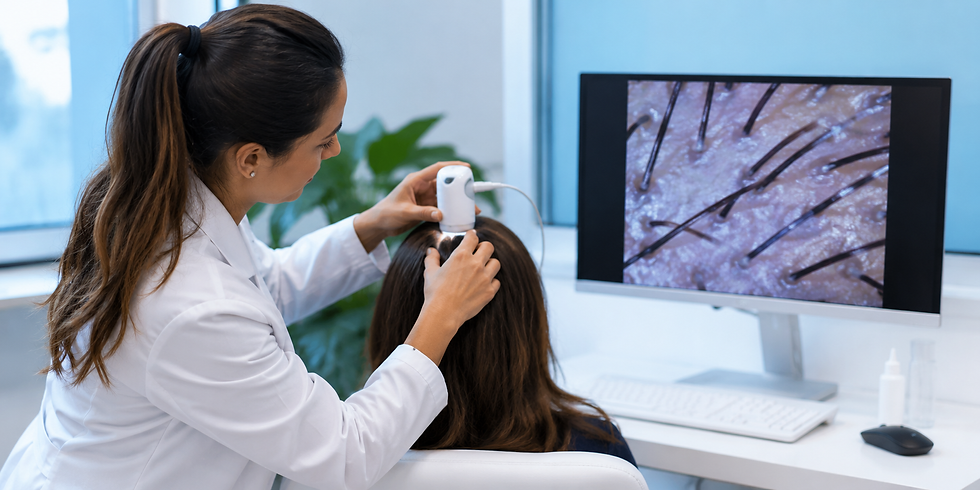
A professional scalp assessment allows us to:
Identify congestion, inflammation, or imbalance
Distinguish cosmetic issues from medical scalp conditions
Understand how scalp health may be impacting hair loss
Create a personalized plan based on root causes
Most people are surprised by what’s happening beneath their hair.
The Bottom Line
Healthy hair cannot exist without a healthy scalp.
If you’re dealing with itching, flaking, oiliness, shedding, or slow growth, your scalp may be asking for attention — even if your hair still looks fine.
Listening early can make all the difference.
Ready to Understand Your Scalp?
👉 Book your FREE Scalp Assessment
Our specialists will help you uncover what’s really happening beneath the surface — and guide you toward healthier hair, starting at the root.

Comments