
Is It Seasonal Shedding or a Sign Your Hair Needs a Closer Look?

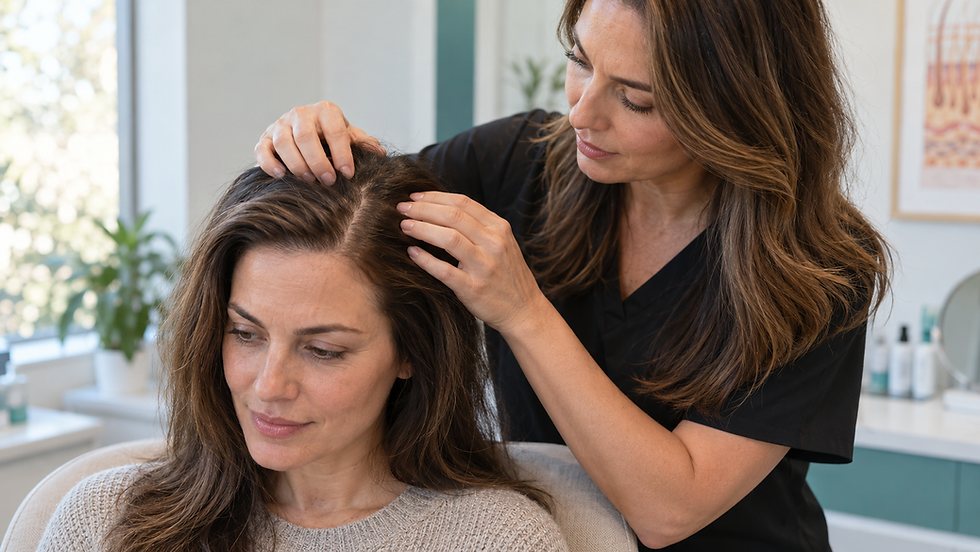
Noticing more hair in the shower, on your brush or around your home can be unsettling. When this happens during a change in season, it is often described as “seasonal shedding.”
But is the season really responsible?
A temporary change in shedding may occur, but increased hair fall does not always have one simple explanation. The pattern, timing and duration of the change can provide more useful information than the number of hairs you notice on a single day.
Shedding is part of the normal hair cycle
Each hair follicle moves through a cycle that includes growth, transition, rest and release.
Because follicles do not all follow the same schedule, it is normal for some hairs to be released every day. You may notice these hairs while washing, brushing or styling.
Your routine can also affect how much hair appears to come out at once. For example, someone who washes their hair every few days may see more loose hairs during one wash than someone who washes daily.
The more important question is whether the amount has noticeably changed from what is normal for you.
Signs of increased shedding may include:
More hair than usual collecting in the shower
A fuller brush or comb after styling
Loose hairs appearing more frequently on clothing or furniture
More hair coming away when you run your fingers through it
A ponytail that gradually feels smaller
These observations do not identify the cause, but they can help you recognize when something has changed.
Timing may offer important clues
Hair does not always respond to an internal or external trigger immediately.
Increased shedding can become noticeable weeks or even months after an illness, surgery, significant stress, rapid weight change, childbirth, nutritional change or another physiological event.
This delay can make the cause difficult to recognize. By the time the shedding begins, the original trigger may no longer feel recent or relevant.
When reviewing a change in hair fall, it can be helpful to think beyond the past few days. Consider what was happening with your health, nutrition, stress levels or medications during the previous several months.
Seasonal timing does not always mean seasonal shedding
If increased hair fall begins in the fall, it is easy to assume that the season is responsible. However, timing alone cannot confirm the cause.
A temporary increase in shedding may settle as the hair cycle readjusts. Persistent shedding, progressive thinning or changes in the scalp may point to another process.
This is why it is important not to dismiss every autumn hair concern as normal seasonal shedding.
Look at the pattern, not only the amount
Shedding and thinning are related, but they are not the same thing.
Shedding refers to hairs being released from the follicles. Thinning refers to a reduction in visible density. A person can experience shedding without developing permanent thinning, but shedding and progressive hair loss can also occur at the same time.
Diffuse shedding may affect the scalp more generally. Pattern hair loss may appear as:
A widening centre part
Increased scalp visibility through the crown
Changes around the temples or frontal hairline
A gradual reduction in ponytail density
Finer or shorter hairs in specific areas
Patchy loss, scalp pain, burning, marked redness, heavy scaling or eyebrow loss are different signs that should not be treated as ordinary seasonal shedding.
Your scalp can provide additional information
Hair fall should not always be evaluated separately from scalp health.
Itching, flaking, redness, oiliness, tenderness or buildup may indicate that the scalp also needs attention. Conditions such as dandruff, seborrheic dermatitis and psoriasis can affect scalp comfort and may contribute to scratching, breakage or temporary shedding.
The presence of scalp symptoms does not automatically explain every hair change, but it can provide another piece of the overall picture.
Avoid changing everything at once
When shedding increases, it can be tempting to begin several supplements, serums and shampoos at the same time.
This can make it harder to understand what is happening. Some products may also irritate a sensitive scalp, while unnecessary supplementation can create other concerns.
Before building a new routine, it is helpful to clarify:
When the change began
Whether it is improving, stable or progressing
Which areas of the scalp are affected
Whether the strands are shedding from the root or breaking
Whether scalp symptoms are present
Whether there were possible triggers in the previous months
When should you have your hair assessed?
Consider a professional hair and scalp assessment if the shedding:
Is noticeably different from your usual baseline
Continues for several weeks without improving
Is accompanied by visible thinning
Appears in patches
Comes with scalp pain, burning, redness or significant scaling
Began alongside other unexplained health changes
Hair concerns can overlap. Someone may experience temporary shedding while also developing pattern thinning or managing an inflammatory scalp condition.
A structured history and close examination of the hair and scalp can help separate these possibilities and determine whether medical testing or referral may be appropriate.
Your hair may be telling a longer story
A change in hair fall does not always mean something serious, but it should not automatically be dismissed because it began during a particular season.
The pattern, timeline, scalp condition and possible triggers all matter.
If you have noticed increased shedding, a widening part or a change in your overall hair density,
Restore Hair Loss & Scalp Clinic can help you take a closer look.
Get your FREE Assessment to learn which next step may be appropriate for your hair and scalp concerns.

Comments