
Dry Scalp, Dandruff or Psoriasis: Why the Difference Matters


You notice flakes in your hair or on your clothing, so you reach for a dandruff shampoo.
But what if dandruff is not the cause?
Dry scalp, dandruff, seborrheic dermatitis and scalp psoriasis can all cause visible flakes. However, they are not the same condition, and the most appropriate care may be different for each one.
The appearance of the flakes can offer clues, but it is not always possible to identify a scalp condition by looking at the flakes alone.
Is it simply a dry scalp?
A dry scalp develops when the skin does not retain enough moisture.
The scalp may feel:
Dry or tight
Mildly itchy
Sensitive after washing
Uncomfortable in cold or dry weather
The flakes are often small, light and dry. Other areas of the skin may also feel dry.
Possible contributors include cold weather, indoor heating, hot showers, frequent washing and products that remove too much oil from the scalp. Fragrances, essential oils, hair colour and other ingredients may also irritate sensitive skin.
Although a dry scalp may improve with a gentler routine, persistent flaking should not automatically be treated as dryness. Several inflammatory scalp conditions can also create dry-looking flakes.
What does dandruff look like?
Dandruff commonly causes white or grey flakes that collect in the hair or fall onto the shoulders. The scalp may also feel itchy.
Dandruff is generally considered a mild form of seborrheic dermatitis. Unlike simple dryness, it is associated with oily areas of the skin and the scalp’s response to factors that may include natural oil production and microorganisms that normally live on the skin.
This is why adding more oil to a flaky scalp does not always solve the problem. If the underlying concern is dandruff or seborrheic dermatitis, heavy oils may create more buildup without addressing the cause.
When might it be seborrheic dermatitis?
Seborrheic dermatitis can cause more noticeable inflammation than mild dandruff.
Possible signs include:
White or yellowish flakes
Greasy or dry-looking scale
Itching or burning
Redness on lighter skin tones
Pink, purple, lighter or darker areas on deeper skin tones
Scaling around the eyebrows, ears or sides of the nose
Symptoms that improve and then return
Seborrheic dermatitis often affects areas with more oil-producing glands, including the scalp, face and upper chest.
Symptoms may flare periodically. Weather changes, stress, illness and individual skin sensitivity can influence how the condition behaves.
What can scalp psoriasis look like?
Psoriasis is an immune-mediated condition that can affect the scalp and other areas of the body.
Scalp psoriasis may cause:
Clearly defined patches or plaques
Thick or layered scale
Silvery-white scale on some skin tones
Grey, purple or darker areas on deeper skin tones
Dryness that may crack or bleed
Itching, soreness or burning
Scaling that extends beyond the hairline
Changes behind the ears or at the back of the neck
Scalp psoriasis may be mild and limited to a small area, or it may involve much of the scalp. Some patients also have psoriasis on the elbows, knees, back or other parts of the body. Nail changes or joint symptoms may also be present.
Because psoriasis can resemble dandruff, seborrheic dermatitis or other scalp conditions, professional evaluation may be needed.

Can scalp conditions contribute to hair loss?
Dry scalp, dandruff and psoriasis do not all affect the hair in the same way.
Scalp psoriasis can sometimes be accompanied by temporary hair loss. Inflammation, repeated scratching, forcefully removing scale and aggressive treatment of the area may contribute to hair breakage or shedding.
Seborrheic dermatitis may also cause significant itching. Frequent scratching can damage the hair shaft and irritate the scalp.
However, hair loss occurring alongside scalp symptoms may have another cause. Pattern thinning, delayed shedding, alopecia areata and other hair-loss conditions can exist at the same time as a flaky scalp.
The presence of flakes does not necessarily explain the entire hair concern.
Why guessing can make the problem harder to manage
When the scalp becomes flaky, many people begin switching rapidly between shampoos, oils, scrubs and home remedies.
This can create additional irritation.
Common mistakes include:
Scratching or picking at the scale
Scrubbing the scalp aggressively
Applying undiluted essential oils
Using several medicated products simultaneously
Washing with excessively hot water
Applying heavy oils without knowing the cause
Continuing to use a product that causes burning or redness
Removing thick scale forcefully
These approaches may temporarily loosen flakes, but they can also disrupt the scalp barrier, increase discomfort or make it more difficult to understand what triggered the reaction.
What details should you pay attention to?
Before changing your entire hair-care routine, observe what is happening.
Consider:
Are the flakes small and dry or thick and layered?
Does the scalp appear oily, dry or inflamed?
Is there itching, burning, pain or tenderness?
Do the affected areas extend beyond the hairline?
Are similar patches present around the ears, face or body?
Is the scalp cracking, bleeding or producing fluid?
Did the symptoms begin after using a new product?
Are you also experiencing hair shedding, breakage or visible thinning?
Photos taken under consistent lighting may help document how the scalp changes over time.
Avoid picking at the area before taking the photo, as this can temporarily change its appearance.
When should you seek medical care?
A licensed healthcare provider or dermatologist should evaluate scalp symptoms that are severe, persistent or worsening.
Seek appropriate medical care if you notice:
Thick or widespread scaling
Significant pain, burning or tenderness
Cracking or bleeding
Pus, warmth, swelling or another possible sign of infection
Sudden or patchy hair loss
Shiny areas where follicle openings appear to be missing
A rash that spreads beyond the scalp
Joint pain or nail changes alongside possible psoriasis
Symptoms that do not improve with appropriate care
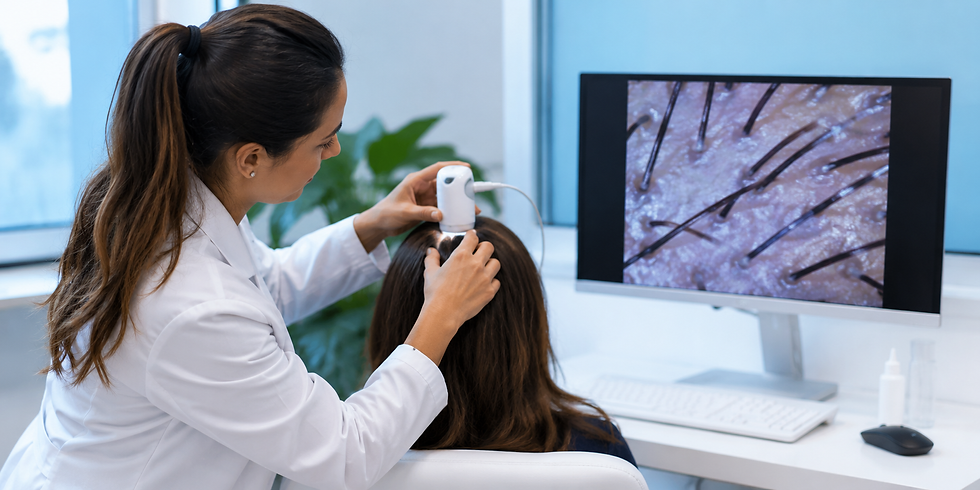
A trichology assessment can help document the scalp, identify visible patterns and determine whether referral to a dermatologist or another healthcare provider may be appropriate. It does not replace medical diagnosis.
The right care begins with understanding the scalp
Flakes are a symptom, not a complete explanation.
Dry scalp, dandruff, seborrheic dermatitis and scalp psoriasis can look similar at first, but they can behave differently and require different approaches.
If your scalp remains itchy, flaky, inflamed or uncomfortable, Restore Hair Loss & Scalp Clinic can help you take a closer look at what is happening.
Get your FREE Assessment to learn which next step may be appropriate for your hair and scalp concerns.

Comments