
Hair Shedding vs Hair Loss: How to Know When It’s More Than “Normal”


Finding hair in your brush or shower drain can be alarming.
Most people immediately think:
“Am I losing my hair?”
But here’s something many people don’t know:
Shedding and hair loss are not always the same thing.
Everyone loses hair every day as part of the natural growth cycle. The concern begins when the balance between shedding and regrowth becomes disrupted.
Understanding what your hair is doing can help you know when to simply monitor changes — and when to seek answers.
Normal Hair Shedding: Part of the Hair Growth Cycle
Hair naturally moves through different phases:
Anagen (Growth Phase)
The active growth stage where follicles produce new hair.
Catagen (Transition Phase)
A short period where growth slows.
Telogen (Resting Phase)
Hair rests before eventually shedding.
Exogen (Shedding Phase)
Old hair falls out to make room for new growth.
Because of this cycle, losing some hair daily is expected.
The goal is not to stop shedding completely — it’s to maintain a healthy balance between shedding and regrowth.
When Does Shedding Become Concerning?
Hair shedding may deserve closer attention when you notice:
More Hair Than Usual
Examples:
Large amounts of hair during washing
Hair covering your pillow or clothing
Increased shedding lasting weeks or months
Changes in Hair Density
You may notice:
Your part looks wider
Your ponytail feels thinner
More scalp becomes visible
Slower Regrowth
Healthy follicles should continue producing new hairs.
If shedding increases while new growth decreases, it may signal an underlying issue.
The Timing of Hair Loss Can Be Misleading
One of the most confusing things about hair loss is that the trigger often happens before the shedding.
For example:
A person may experience stress, illness, hormonal changes, dieting, or nutritional issues — then notice shedding months later.
The delay happens because hairs move through the growth cycle before entering the shedding phase.
This is why identifying the cause often requires looking beyond what happened recently.
Common Reasons Hair Shedding Changes
Excessive shedding can be influenced by many factors, including:
Stress and Physical Changes
Major stress, illness, surgery, or significant body changes can affect the hair cycle.
Hormonal Shifts
Hormones influence follicle activity and growth patterns.
Nutrition
Low levels of important nutrients can affect follicle function.
Scalp Health
Inflammation, irritation, or scalp conditions can interfere with healthy growth.
Genetics
Some types of thinning happen gradually due to follicle sensitivity over time.
Why Guessing Can Delay the Right Solution
A common approach is:
“I’ll wait and see if it gets better.”
Sometimes shedding resolves naturally.
But waiting too long can be a problem if the underlying cause involves:
Progressive follicle miniaturization
Chronic inflammation
Scalp disorders
Ongoing triggers
The earlier the cause is understood, the more options may be available.
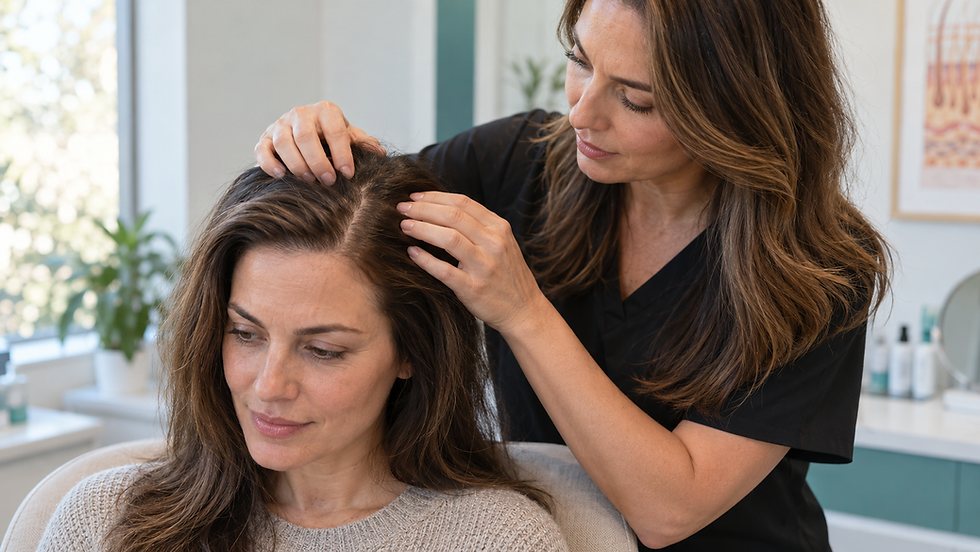
What Happens During a Hair & Scalp Analysis?
A professional evaluation looks beyond how much hair is falling.
It helps assess:
Scalp condition
Follicle health
Hair density
Growth patterns
Possible contributing factors
This creates a clearer picture of what is happening beneath the surface.
Final Thoughts
Hair shedding is normal.
But changes in your usual shedding pattern may be your body’s way of telling you something needs attention.
Instead of counting every strand, focus on the bigger picture:
Is your hair growing back?Is your density staying the same?Is your scalp healthy?
Understanding the difference between shedding and hair loss is the first step toward protecting your hair.

Comments